
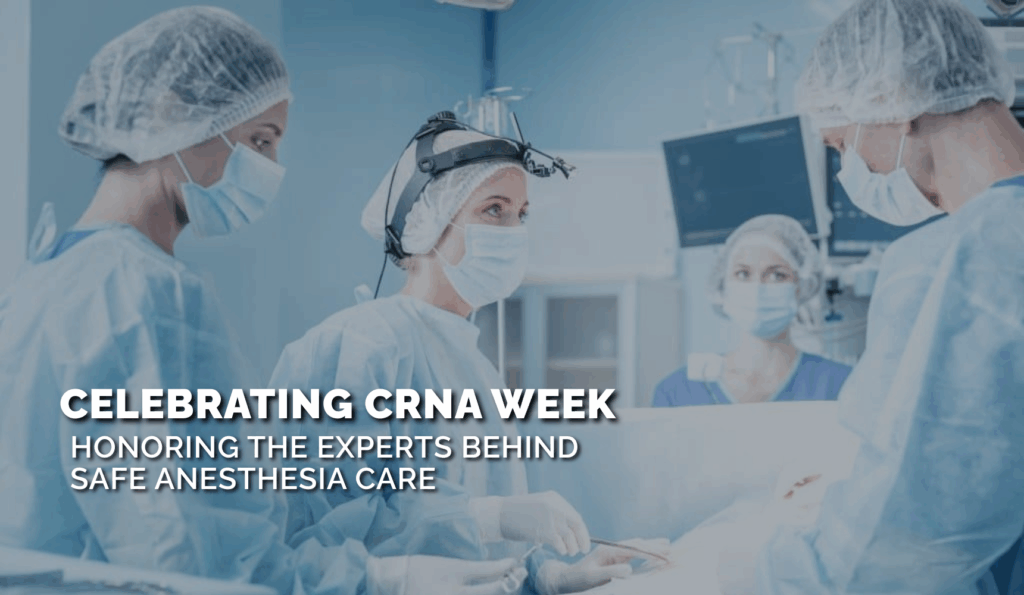
CRNA Week is all about recognizing the critical role Certified Registered Nurse Anesthetists play in healthcare and taking a moment to say thank you for the expertise, calm presence, and precision they bring to every single patient interaction. From routine procedures to high-risk surgeries, CRNAs are often the steady, reassuring force in the room making sure patients are safe, comfortable, and cared for when it matters most.
While anesthesia is just one part of the surgical process, it is a massive responsibility, and CRNAs carry it with confidence, skill, and deep clinical knowledge. CRNA Week gives us the opportunity to slow down and acknowledge the impact of their work, both inside the operating room and beyond it.
What Is a CRNA?
Certified Registered Nurse Anesthetists are advanced practice registered nurses who specialize in anesthesia care. They are responsible for administering anesthesia, monitoring patients throughout procedures, managing pain, and responding quickly to any changes in patient condition.
CRNAs work in a wide range of settings, including hospitals, outpatient surgery centers, trauma units, and rural healthcare facilities. In many areas, especially underserved and rural communities, CRNAs are the primary anesthesia providers, making access to surgical and procedural care possible.
Their training is rigorous. CRNAs complete advanced graduate education, extensive clinical hours, and ongoing certification requirements. The role demands a unique combination of technical skill, critical thinking, and emotional intelligence, often under intense pressure.
Why CRNAs Are So Essential to Patient Care
Anesthesia is not a “set it and forget it” responsibility. It requires constant assessment, quick decision-making, and a deep understanding of human physiology. CRNAs manage airways, adjust medications in real time, and ensure patient stability before, during, and after procedures.
Beyond the technical side, CRNAs often serve as a calming presence for patients who are anxious or fearful before surgery. For many patients, the CRNA is the last face they see before going under anesthesia and the first one they see when they wake up. That trust is not taken lightly.
CRNAs also play a major role in pain management, post-operative recovery, and patient education. Their work directly impacts patient outcomes, safety, and overall experience.
CRNAs in the Travel Healthcare World
For travel CRNAs, the role comes with an added layer of adaptability. Stepping into new facilities, learning different protocols, and building trust with new teams all happen quickly, often assignment after assignment.
Travel CRNAs are known for being flexible, highly skilled, and ready to hit the ground running. They fill critical staffing gaps, support overextended facilities, and bring valuable experience from different healthcare environments. Their ability to adapt without compromising patient care is something worth celebrating, especially during CRNA Week.
The Impact CRNAs Make Every Single Day
CRNAs are there for some of the most intense moments in a patient’s life. Emergency surgeries. Life-saving interventions. Complex procedures that require absolute focus and precision. They operate behind the scenes, but their impact is front and center when it comes to patient safety.
Their role also extends beyond patient care. Many CRNAs mentor nurses, precept students, participate in leadership roles, and advocate for best practices in anesthesia care. They are educators, problem solvers, and trusted clinical leaders.
Why CRNA Week Matters
Healthcare moves fast, and it is easy for incredible work to go unnoticed. CRNA Week creates space to recognize a profession that is essential, highly specialized, and often underappreciated outside of clinical circles.
Celebrating CRNA Week is not just about recognition. It is about appreciation. It is about acknowledging the long hours, the pressure, the responsibility, and the dedication it takes to do this job well.
Whether you are a CRNA currently on assignment, a staff CRNA holding it down at your facility, or someone considering this career path, this week is for you.
How Organizations Can Show Appreciation
Recognizing CRNAs does not have to be complicated. A genuine thank-you, a spotlight on their work, or a message acknowledging their impact goes a long way. Highlighting CRNAs on social media, sharing stories from the OR, or simply checking in to say “we see you” can make a difference.
At the end of the day, CRNAs want the same thing most healthcare professionals want: to feel valued, respected, and supported in the work they do.
A Final Thank You to CRNAs
CRNA Week is a reminder of just how vital this role is to healthcare. The expertise, confidence, and compassion CRNAs bring to patient care does not go unnoticed, even if it often happens quietly behind the scenes.
To every CRNA reading this, thank you for the responsibility you carry, the trust you earn, and the care you provide day in and day out. Healthcare would not function the same without you, and this week is a small but meaningful way to recognize everything you do.